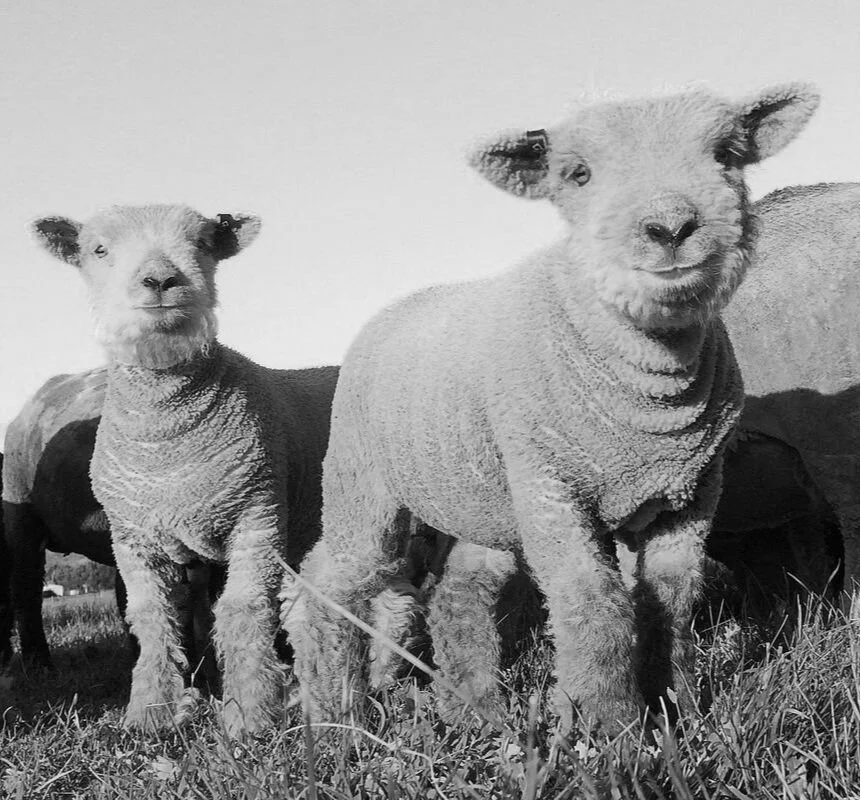
The History of Babydoll Sheep
The History of Babydoll Sheep
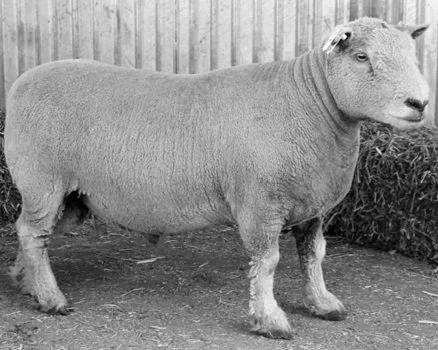
DESCRIPTION:
HEAD - Wide and level between the ears, with no sign of a dark poll.
MUZZLE AND FACE - Full, not too long from eyes to nose. The fleece and hair on the muzzle should be even colored from very light tan to cinnamon or mousey grey, ideally covering the entire muzzle, extending from the corners of the mouth to a rounded point between the eyes. The fleece should not be so long as to obstruct vision.
EYES - Large and bright
EARS - Set level with the head and of medium size, covered with short wool
NECK - Wide at base, short, strong and well set on shoulder
LEGS - Forelegs should be short and well placed at the corners. Hindlegs should be short, full and well let down. Lower leg fleece colour is similar to muzzle colour and extending from the feet to the knees where it meets the body fleece
SHOULDERS - Well laid into the ribs and level to the back. The width at the shoulders should be less than the width at the hips to facilitate easy lambing
BACK -Level from shoulder to tail with only a slight slope of the croup. Overall body length should be slightly longer than tall
CHEST - Wide and deep
LOIN - Long, wide and thick
RIBS - Deep and wide, thick through the heart girth and well sprung
RUMP - Wide and of medium length with only a slight slope of the croup
TAIL - Wide and set high on a line almost level with the top-line when standing in a natural alert stance
HIND / SADDLE - Full and well-muscled, with a deep wide muscling through the twist and legs
SKIN - A healthy pink
HEIGHT - All measurements are taken at the highest point of the middle of the shoulder and perpendicular to the ground on a shorn sheep. Adult sheep should be between 45cm and 61cm
FLEECE - Fine, tight and dense, with a medium to medium-fine, soft and springy crimp
RAMS - Rams should look more masculine and are usually larger than ewes They must have both testicles descended
EWES - Ewes should have a broad, well attached but not pendulous udder with two teats
The Southdown sheep were originally farmed in the southern part of the counties of Kent, Sussex, Hampshire and Dorsetshire in England. They are named Southdown’s after the long range of chalky hills where they were originally grazed.
In Australia, the Southdown dates back to the beginnings of the sheep industry; having come to Australia on the first fleet and over time their breed characteristics have been changed by breeders to better meet Australian conditions.
Like most modern ovine, the Southdown have changed to a much larger frame, elongated necks and legs, and with very little wool on their faces. This type of Southdown is sometimes known as the ‘Modern Southdown’ and most Southdown’s in Australia are of this type.
Fortunately for the Babydoll sheep, the Metcalf brothers, Dick and Bill, continued to breed the “original” Southdown, and Dick and Bill were very successful breeders as well as winning many championships.
The Metcalf brothers eventually passed their stud onto Mr. & Mrs. Murray and Judy Peart, who continued to produce the Original Southdown at Hillgrove Stud near Greenhill in Central Victoria. We are very fortunate that Hillgrove Stud has stayed true to the original Southdown as without them it is doubtful if they would have survived for us to enjoy today.
Hillgrove Stud continues to breed some of the most sought after Babydolls in Australia, under the guidance and expertise of Janice & Chris Evans whose stud is now located in Moama, NSW.
The “"Babydoll”" name was formally adopted in Australia by the Australian Stud Sheep Breeders Association (ASSBA) in 2020 and Babydolls now have their own section in the ASSBA Flock Registry.